CHARM Visit to the 24/7 Neighbourhood Mental Health Centre, Birmingham, April 2026
Introduction
On 8 April 2027, four CHARM members— Angela Mugan, Jan Hanson, Anandi Ramamurthy, and Paul Baker—visited the newly established 24/7 Neighbourhood Mental Health Centre in Birmingham. The visit took place at the invitation of Dr Sashi Sashidharan,
Consultant Psychiatrist and a key contributor to the development of this model.
This service forms part of a national NHS pilot exploring a neighbourhood-based, 24/7 model of mental health support.
The centre provides a walk-in, round-the-clock service offering immediate access to mental health support without the need for referral. It serves a local population of approximately 50,000 people across Small Heath, Bordesley Green, and the Heartlands area. The service works with 1,200 people. 700 were inherited from CMHT, 3-400 are referrals from GPs. About 18% are walk-ins. It serves a community of 50,000 people. The centre is based in a community building belonging to a local Muslim organisation that runs a mosque and educational services in the local area.The model integrates clinical services, social support, and voluntary sector provision creating a unified point of access for assessment, crisis response, and ongoing support.
Environment and First
Impressions
The centre is a welcoming and thoughtfully designed space.
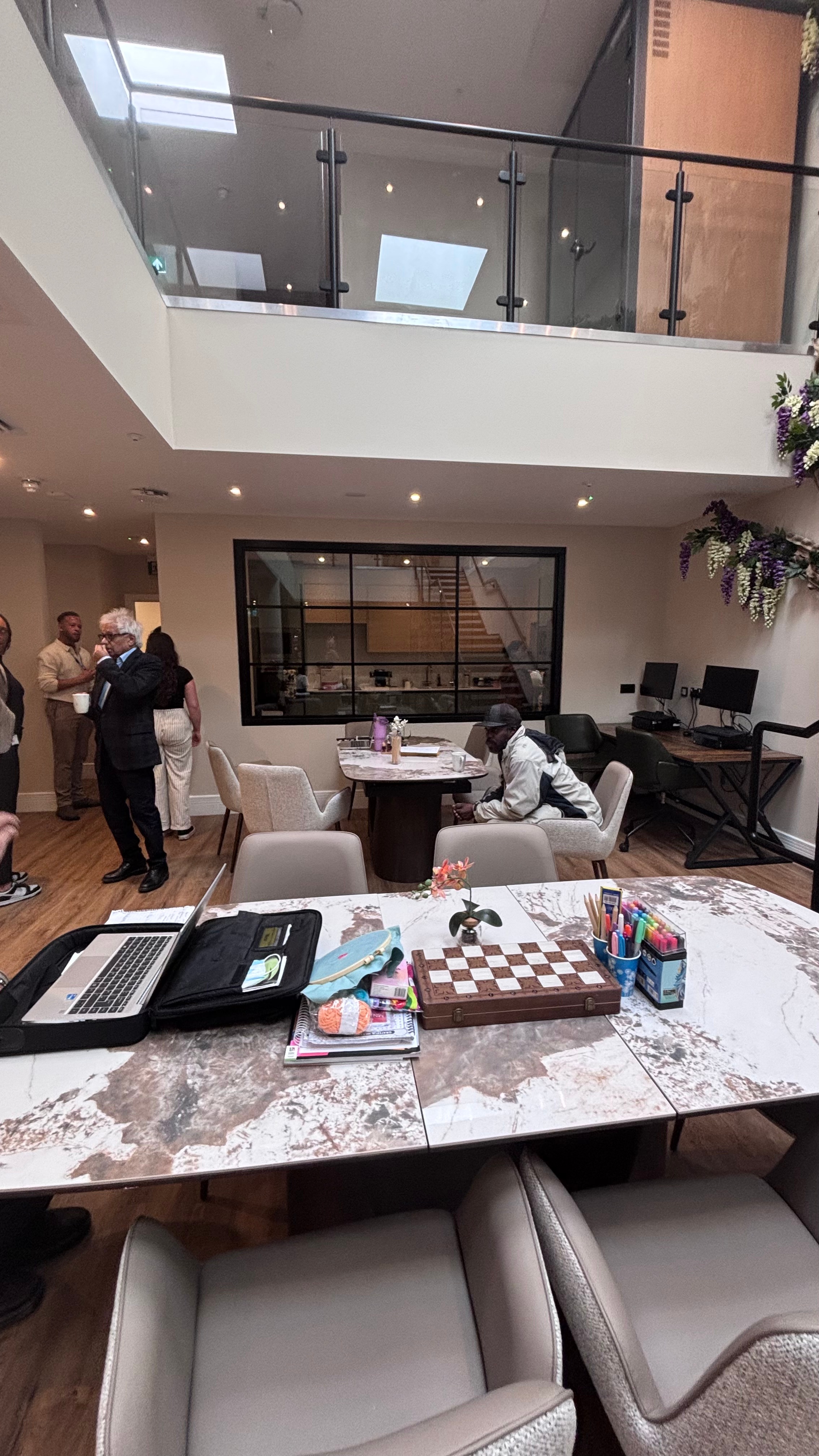
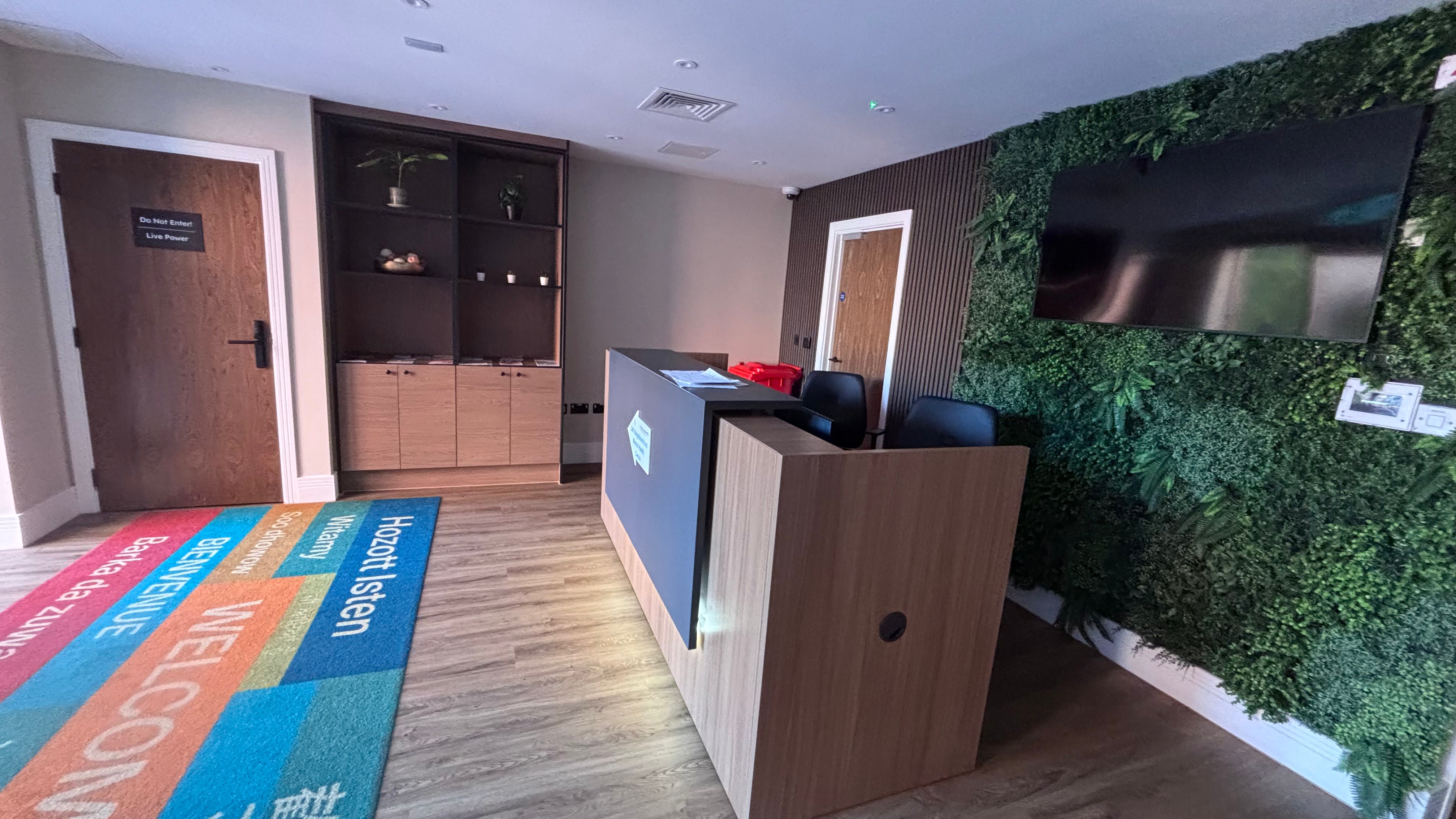
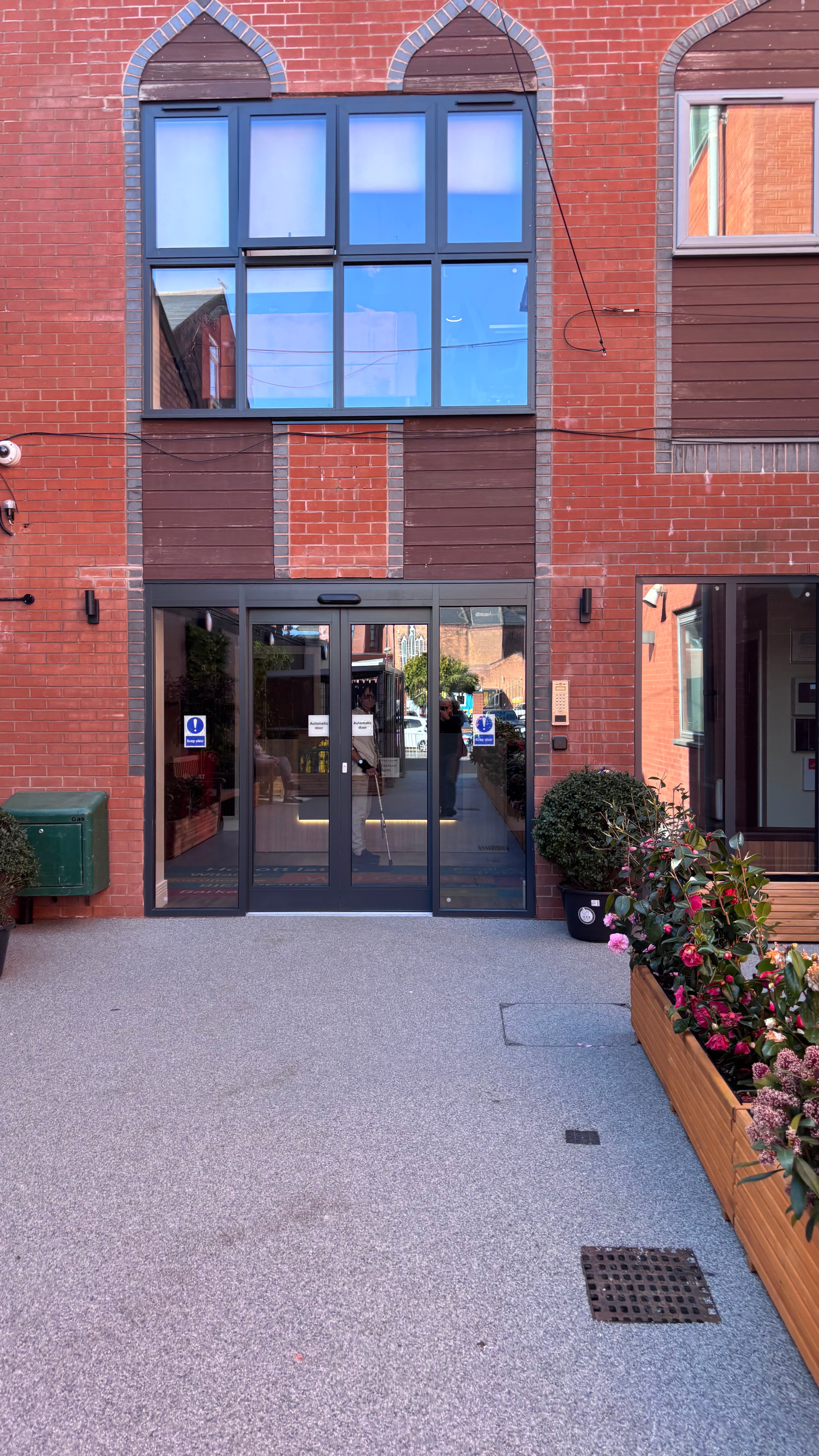
The reception area is open and accessible, which feels more like a welcoming guest house than a clinic. Staff were warm, informal, and approachable. A plant-lined entrance creates a transition into the space,while the interior—featuring natural materials and open-plan areas—supports a sense of openness and ease. The main living space is particularly notable for its light, double-height structure and central design features that promote a tranquil atmosphere.
We informally met with guests who were using the space and seemed relaxed, engaging in conversations, and accessing refreshments independently. One person mention that it didi not feel like a waiting room and there were things to be involved in. The absence of locked doors contributed to a feeling of freedom and trust. The absence of physical barriers at reception further supports a sense of openness and trust. The language used within the service—such as referring to people as “guests”—reinforces a culture of respect and warmth. The overall setting supports a sense of dignity, privacy, and calm.
Facilities and Physical Space
The design of the building contributes to a calm and reflective environment. The service offers a range of flexible and well-designed spaces, including:
● Communal living areas that support social interaction
● Private rooms for confidential conversations including a tasteful glass pod
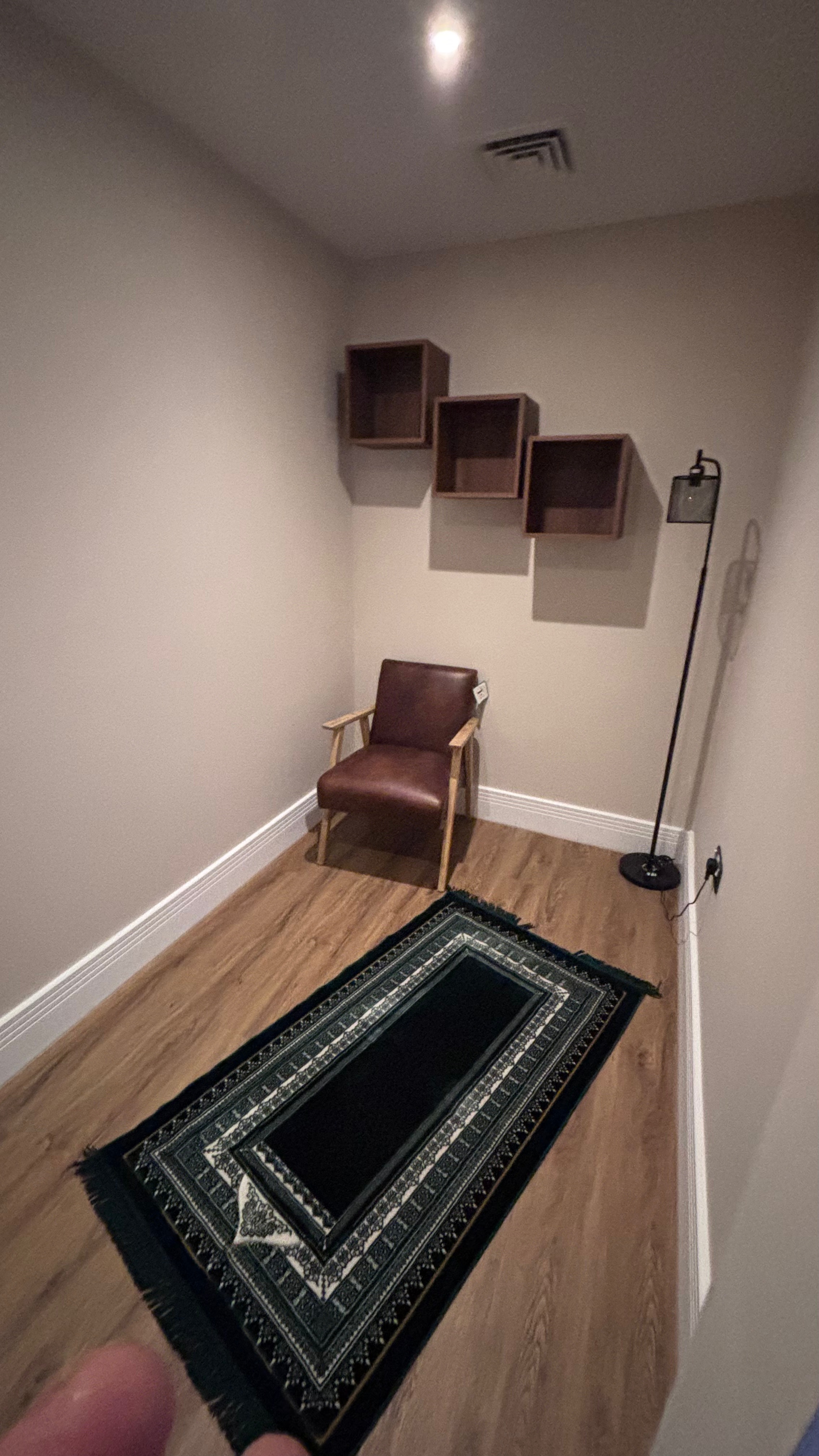
● A prayer room
● An initial assessment room with a beautiful glass table and restful nature inspired wallpaper
● Five bedrooms, include provision for family use and accessibility needs
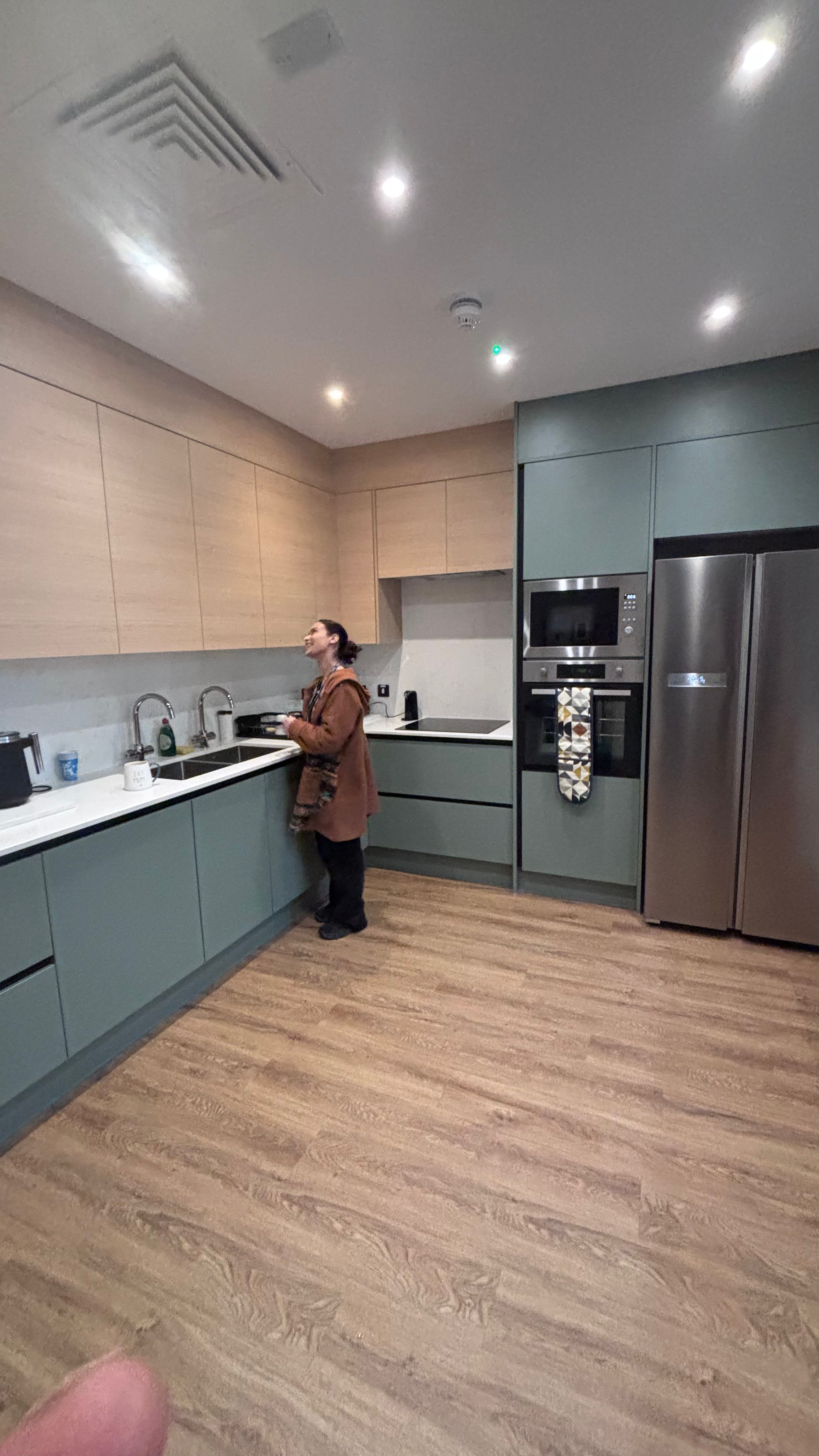
● A shared kitchen area accessible to guests
● Digital access via computers and television
● A conference room
● A clinic
● Staff roomThe centre operates with no locked doors in living spaces or at the entrance. It is supported by overnight staffing, enabling access at all times, although after 8pm the space is accessed via an intercom.
Staff Culture and Service Ethos
We met a range of staff, including clinical leads, managers, mental health practitioners, and representatives from partner organisations. A consistent theme across discussions was a relational and person-centred approach to care. Staff described their work as focused on building meaningful, ongoing relationships, supporting continuity and trust.
Discussions with staff indicated that they did not experience open access as creating dependency. They valued the holistic approach and the continuity of care and noted how much this contrasted with Treatment as Usual.
They also expressed how people said the 24/7 service made them feel that they were treated as human.The service reflects principles aligned with social psychiatry, with an emphasis on understanding individuals within their broader life context. Staff engagement with guests appeared natural and responsive. Care was collaborative.
The presence of psychological expertise within the team supports both individual and group- based interventions, with plans to expand group work tailored to community needs such as a space for Black men to explore masculinity. Staff were keen to explore developing a Hearing
Voices Group.
The overall staff culture is characterised by commitment, shared purpose, and a strong sense of collective endeavour.
Service Model and Strucure
The service operates through a structured and integrated model, with four key pathways:
● Intake: Assessment and initial engagement
● Crisis Support: Rapid response with a low threshold for access
● Assertive Engagement: Outreach to individuals less likely to engage with services
● Taking Charge: Supporting autonomy and connection with community resources
This model enables individuals to access a range of support options within one setting, reducing the need for multiple referrals and promoting continuity of care. From reports the model is not more expensive, given that it removes the need for hospitalisation and its associated costs.Notably the service uses the Dialogue+ intake form rather than any standard form. This supports a collaborative assessment and shared decision-making from the outset.The service operates as part of a hub-and-spoke model, with the centre acting as the hub and partnerships with 12 community organisations extending support into the wider community to help prevent institutionalisation and integration into community services. These partnerships include wellbeing organisations, legal services, and community-based activities including eg Boxercise.
Support within the centre is practical, flexible, and responsive. In addition to clinical care, staffprovide assistance with everyday needs, including accompanying individuals to appointments if needed and supporting access to services such as lawyers, incorporating a rights based approach.
The service emphasises timely support, with many individuals benefiting from short periods of engagement that meet immediate needs effectively. Guests are encouraged to access resources as they need, including a 24-hour laundry room and an open access kitchen access contributing to a sense of normalcy and independence. There are plans to further develop group activities and shared community events, including communal meals.
Conclusion
The 24/7 Neighbourhood Mental Health Centre in Birmingham supports the whole community. Its emphasis on accessibility, relational care, and community integration creates a model that is practical, safe, person-centred and affordable. The combination of a welcoming physical environment, a committed multidisciplinary team, and strong links with community organisations contributes to a cohesive and effective approach for all. This pilot demonstrates the potential for a neighbourhood- based model to provide comprehensive mental health support within a single, integrated setting,
closely connected to the communities it serves.Considerations for Development in Manchester
Next Steps
● Identify a senior clinical leader to support development and implementation
● Undertake a baseline audit of local need, resources, and service activity
● Engage system partners to support alignment and delivery
Proposed Locality: Longsight, Moss Side, Rusholme
The areas of Rusholme, Longsight, and Moss Side (population approximately 56,000–60,000) represent a coherent and appropriate locality for exploration of a similar model.
This area offers:
● A population size comparable to the Birmingham model
● Strong existing community networks
● Opportunities to strengthen integration across services
● A diverse and dynamic population with a range of needs
The locality provides a suitable context in which to develop a neighbourhood-based, integrated model that supports accessibility, continuity, and community connection.
Action Point
● Paul Baker to support the development of a Hearing Voices-informed approach within the Birmingham team as part of ongoing collaboration.