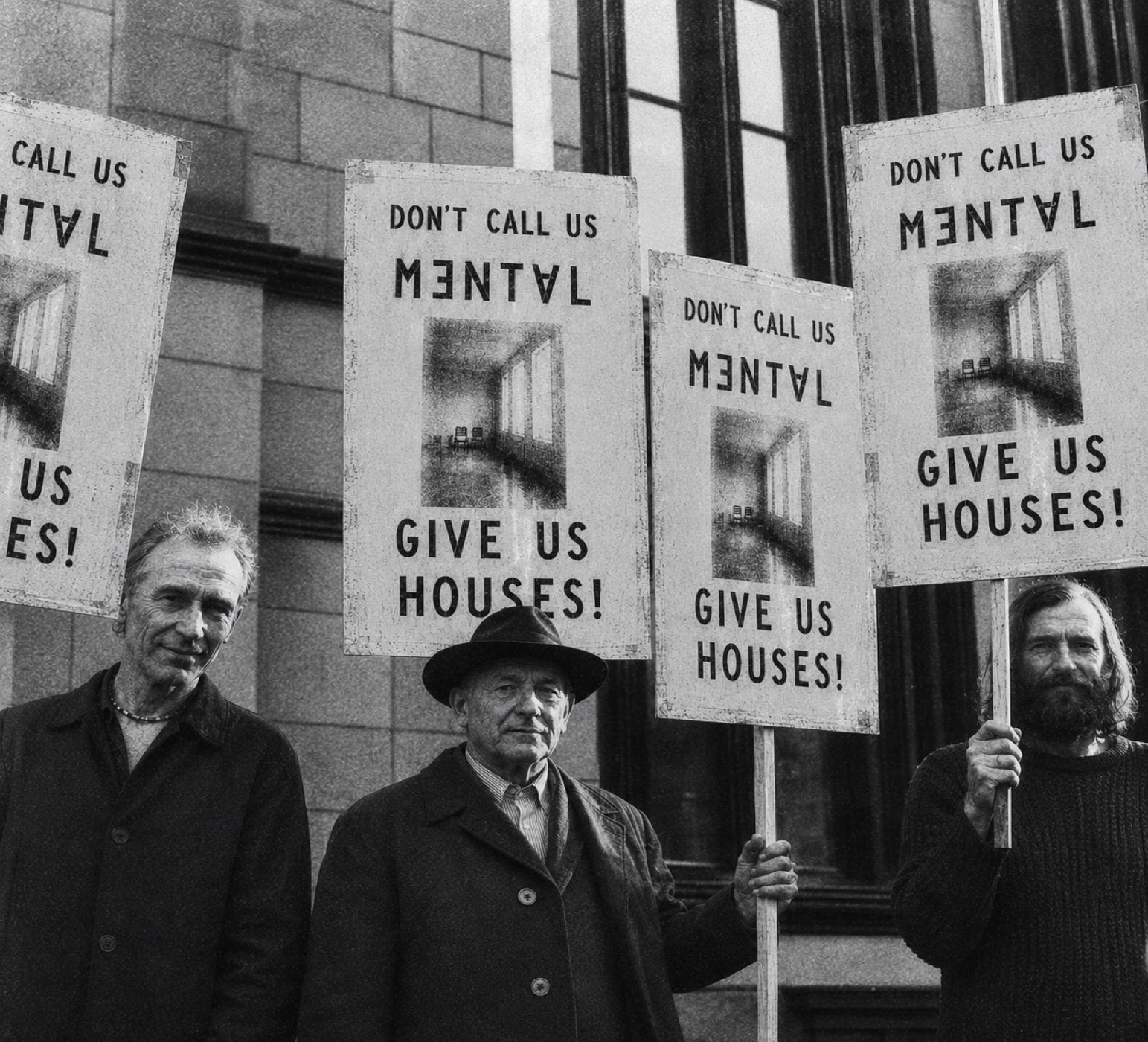
 Manchester Mental Patients Union members protest in 1979. Image reproduced in Tony Baldwinson’s book.
A new book documenting the history of radical mental health activism in Greater Manchester was launched yesterday. Radical Mental Health Activism in Greater Manchester 1960 to 2011 and the Loss of Corporate Memory, edited by Tony Baldwinson, brings together records, reflections and personal accounts from people involved in mental health campaigning and community projects.
The book is free to read online. A small number of hard copies are available for £10 from the People’s History Museum, Manchester.
This book is the result of a great deal of patient work by Tony. With determination and care, he brought together activists’ memories, reports and meeting records, helping to preserve stories and lessons that might otherwise have been lost. He has created a valuable record of the commitment, creativity and hard work of people who shaped mental health support across Greater Manchester.
A history worth carrying forward
The project began in 2018 and was revived after a conversation in March 2026 with Greater Manchester Mayor Andy Burnham about the region’s history of mental health innovation. Drawing on earlier archival work and the recollections of people directly involved, the book also takes care to address privacy, consent and the responsible use of personal accounts.
It tells the story of people who organised to provide support that was more humane, community based and responsive to lived experience. Often working with very limited resources, they developed alternatives to the medical model and hospital centred care. The projects discussed include Getting to Know You, the Harpurhey Resettlement Team, 42nd Street and the Hearing Voices Network.

This is a history of achievement, but also of the pressures that can change community initiatives over time. Projects may attract funding and recognition, yet find themselves reshaped by contracts, commissioning and demands to meet targets they did not set. When groups close or change, the knowledge held by the people who built them can disappear too.
Remembering what organisations have learned
That disappearance is also a loss of corporate memory: the shared understanding of why particular approaches were developed, what worked, what did not, and what people learned along the way. Without it, organisations and decision makers risk repeating old mistakes or treating established ideas as new. The book makes a strong case for institutions to build and maintain this memory in partnership with service users and voluntary sector practitioners.
The story also looks forward. It explores contemporary activism rooted in some of the same values, and connections with mental health movements in Italy and elsewhere. Its message is hopeful: a diverse range of support, shaped by people’s rights and experiences, remains possible and necessary.


The book’s back cover features a photograph of Manchester Mental Patients Union members protesting in 1979.
“It is this combination of looking back and looking forward that makes this book essential reading for policy makers, mental health organisations, health professionals, service users and activists. Our hope is that it will influence current debates about mental health services and help to create a diversity of provision that respects the rights and experiences of the people using them.” Alistair Cox
For CHARM, this history has particular meaning. Our work in peer support, human rights and community led alternatives is part of a wider tradition of people organising for change. We are grateful to Tony for the care and persistence he has brought to documenting that tradition, and for helping ensure its experience and ideas can be shared with future generations.
